
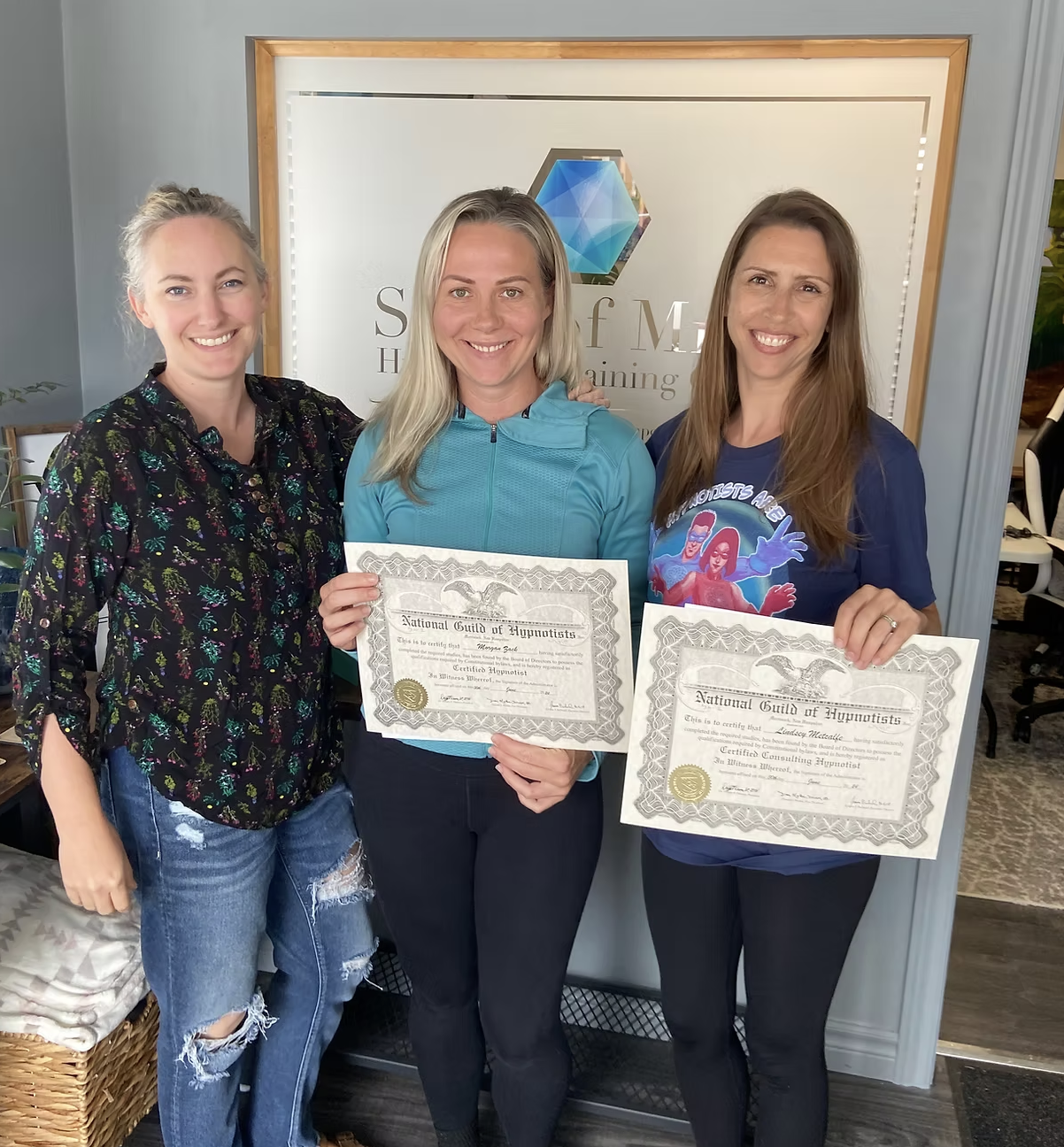
You've completed your hypnosis training, received your certification, and you're officially ready to begin working with clients. But what happens next?
For many newly certified hypnotists, this is where the real learning begins.
During training, you learn inductions, deepeners, suggestions, session structure, and the foundations of working with the subconscious mind. You practise techniques, gain experience, and begin developing your confidence.
Then comes your first real client.
Suddenly, there's no instructor watching over your shoulder, no fellow student waiting to give you feedback, and no guarantee that the person sitting across from you will respond exactly as you expect.
And that's okay.
After nearly 2,000 hypnosis sessions, I can tell you that becoming a confident hypnotist isn't about memorizing the perfect script. It's about learning to work with the person in front of you.
1. Your Certification Is the Beginning, Not the Finish Line
One of the biggest misconceptions about becoming a hypnotist is that you should feel completely confident once you've finished your training.
But confidence doesn't automatically arrive with a certificate.
Training provides the foundation. Experience teaches you how to use it.
You'll encounter clients who respond beautifully to an induction, clients who struggle to settle, clients who talk throughout the session, and clients who open their eyes afterward and tell you they don't think they were hypnotized.
These experiences don't necessarily mean something went wrong.
They're opportunities to develop your understanding of hypnosis and become more adaptable in your approach.
The goal isn't to know everything before you begin. It's to continue learning as you work.
2. Real Clients Don't Always Follow Your Script
I love a good hypnosis script. They're wonderful learning tools, particularly when you're developing your skills.
But there's something important to understand:
Your client hasn't read your script.
They don't know what's supposed to happen next.
They might move, laugh, ask a question, become emotional, or tell you they're not feeling particularly relaxed.
And sometimes, the direction you originally planned for the session simply isn't the direction that makes sense anymore.
This is where your ability to adapt becomes incredibly valuable.
Rather than worrying about getting back to the next paragraph, begin paying attention to what's happening with your client.
What are they telling you?
How are they responding?
Would a different approach be more appropriate?
A script can guide you, but it shouldn't prevent you from responding to the person you're working with.
3. You'll Probably Question Yourself Sometimes
Did I use the right induction?
Should I have deepened them further?
Did they actually go into hypnosis?
Was that suggestion worded correctly?
If you've asked yourself these questions, you're certainly not alone.
New practitioners often spend a great deal of time reviewing their sessions in their minds.
Some reflection is valuable. It's how we learn.
But there's a difference between thoughtfully reviewing your work and expecting every session to unfold perfectly.
Instead of asking, Did I do everything right?, consider asking:
What went well during that session?
What did I notice about the client's responses?
Was there anything I could have approached differently?
What would I like to learn more about?
These questions turn uncertainty into professional development.
4. Learn to Be Comfortable When Things Are Unexpected
One of the most valuable skills you can develop as a hypnotist is the ability to remain calm when something unexpected happens.
A client might tell you their mind was racing throughout the session.
Another might say they could hear every word you spoke.
Someone else might open their eyes halfway through an induction.
It's tempting to interpret these experiences as signs that hypnosis isn't working.
But hypnosis doesn't necessarily look or feel the way people expect it to.
Clients can remain aware of their surroundings, notice their thoughts, and remember what happened during a session.
Your role is to understand the experience, communicate clearly, and make appropriate adjustments when needed.
And sometimes that means changing direction entirely.
Don't be afraid to change your approach simply because it wasn't part of your original plan.
5. Keep Practising, Even When You Don't Have Clients Booked
You don't need a full appointment calendar to continue developing your hypnosis skills.
In fact, the time between sessions can be incredibly useful.
Practise your inductions aloud. Experiment with different deepeners. Become familiar with techniques that weren't your favourites during training.
You can also practise with willing volunteers, provided you're working within your training, obtaining appropriate consent, and maintaining professional boundaries.
And don't underestimate the value of simply speaking your scripts aloud.
Reading a script silently and delivering it naturally to another person are two very different experiences.
The more comfortable you become with the language of hypnosis, the less you'll feel tied to the page.
6. Find People You Can Talk to About Your Sessions
Hypnosis can be a surprisingly solitary profession.
You might spend your day working one-on-one with clients, yet have very few opportunities to discuss your experiences with other hypnotists.
This can be especially challenging when you're newly certified.
You may encounter something during a session that wasn't covered in your training, or find yourself wondering how another practitioner might approach a particular situation.
Having access to experienced colleagues, professional discussion groups, or mentorship can make a meaningful difference.
It gives you somewhere to ask questions, explore different approaches, and receive constructive feedback.
Of course, client confidentiality must always be respected when discussing professional experiences.
The purpose of mentorship isn't to have someone tell you exactly what to do in every situation.
It's to help you develop your own professional judgment.
7. You Don't Have to Learn Everything at Once
When you're beginning your hypnosis career, it's easy to feel as though you need to learn every technique, take every additional course, and specialize in everything immediately.
But you don't.
Start by becoming comfortable with the foundations you've already learned.
Develop a session structure that works for you.
Understand your professional scope and boundaries.
Become confident communicating with clients before, during, and after hypnosis.
As you gain experience, you'll naturally discover which areas interest you most and where additional training would be valuable.
There's no need to rush that process.
The Hypnotist You Become Is Built Through Experience
One of the things I enjoy most about hypnosis is that there's always something more to learn.
Even after years of working with clients, I still encounter situations that invite me to think differently, adjust my approach, or explore another possibility.
And that's part of what makes this work so interesting.
If you've recently completed your hypnosis training, give yourself permission to be a developing practitioner.
You don't have to know everything.
You do need to keep learning, practise responsibly, recognize your limitations, and remain curious about the people you're working with.
Your certification gave you a foundation.
What you build on that foundation is what will shape the hypnotist you become.
Looking for Support as You Develop Your Hypnosis Practice?
I'm Hilary Leehane, a professional hypnotist, hypnosis trainer, and founder of State of Mind Hypnosis & Training Centre.
After nearly 2,000 client sessions, I know how valuable it can be to have someone to talk to when you're developing your skills.
Through my Hypnosis Mentorship, I work with new and developing hypnotists who want practical guidance, professional feedback, and support navigating real-world client situations.
Whether you're looking for help with session structure, inductions, client communication, or those unexpected moments that leave you wondering what to do next, mentorship provides an opportunity to explore your questions and strengthen your confidence.
Explore 1:1 Hypnosis Mentorship at State of Mind Hypnosis & Training Centre.
Explore Small Group Hypnosis Mentorship at State of Mind Hypnosis & Training Centre.